

Cloud adoption is no longer single-platform. In 2026, most enterprises operate in multi-cloud environments, combining AWS, Microsoft Azure, and Google Cloud to optimize cost, performance, security, and compliance. As a result, IT professionals who understand multiple cloud platforms have a significant competitive advantage. The key question is: How should you build a smart multi-cloud certification strategy without overwhelming yourself? This guide breaks down a practical, role-based roadmap to becoming multi-cloud certified.
Organizations adopt multi-cloud strategies to:
Employers now value professionals who can design, deploy, and manage workloads across cloud ecosystems.
Before building your certification path, understand what each cloud does best:
| Cloud | Enterprise Strength | Best For |
| AWS | Largest market share, mature services | Startups, DevOps, global deployments |
| Azure | Enterprise integration, hybrid cloud | Corporate IT, Microsoft environments |
| Google Cloud | Data analytics & AI leadership | ML workloads, data-heavy organizations |
A strong multi-cloud strategy leverages these strengths.
Start with one cloud platform and master it before expanding.
Then move to associate-level:
 Focus on mastering core concepts:
This builds deep competence instead of surface knowledge.
After gaining experience in your primary cloud, add a second provider.
| Primary Cloud | Add This Second |
| AWS | Azure |
| Azure | AWS |
| Either | Google Cloud |
At this stage, aim for:
Focus on understanding differences in:
You are now developing cloud translation skills.
Now target professional-level certifications:
At this stage, your goal is:
You move from cloud user to enterprise architect.
 Cloud Engineer Path
Focus: Deployment, automation, containerization.
 Cloud Architect Path
Focus: Enterprise design, governance, scalability.
 Cloud Security Path
Focus: Zero Trust, identity governance, compliance.
 Cloud + AI Path
Focus: AI workload deployment across clouds.
Certification alone isn’t enough. Employers expect:  Infrastructure as Code (Terraform) Kubernetes & container orchestration CI/CD pipelines Cloud security best practices Networking across clouds Cost governance Monitoring & observability Multi-cloud professionals are integration specialists.
 Trying to learn all three clouds simultaneously Collecting certifications without hands-on labs Ignoring security fundamentals Skipping networking basics Focusing only on theory Multi-cloud mastery requires structured progression.
Professionals with multi-cloud expertise typically enjoy:
Multi-cloud engineers are highly valued because they reduce vendor dependency risk.
By Year 3, you’re positioned as an enterprise-level cloud architect.
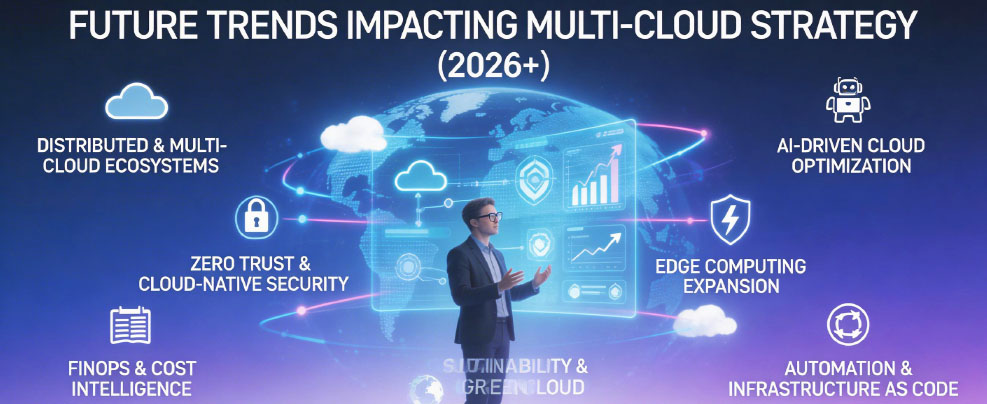
Certifications will increasingly reflect these hybrid skills.
In 2026, cloud professionals who understand only one platform risk limitation. Those who master AWS + Azure + Google Cloud strategically position themselves as enterprise-ready leaders. A successful multi-cloud certification strategy is:
The future of cloud is not single-provider — it’s integrated ecosystems.